When a natural disaster brings flooding to your area, the days that follow can feel confusing and overwhelming, especially when you're not sure when you'll be allowed back into your own home. This guide walks through what actually happens after a natural disaster flood, from evacuation through to long-term recovery, so you know what to expect at each stage.
1. After you evacuate: what to expect first
In the immediate aftermath, Civil Defence takes charge of the emergency response, managing evacuation centres and keeping people safe. Roads may be closed and some areas cordoned off completely, with no one allowed back in until it's safe. During this time, you may not be able to get specific updates about your own property, even if you're desperate to know how it's fared. This is a normal part of the process, not a sign that something's gone wrong.
It's worth keeping an eye on Civil Defence updates in the meantime, whether that's local radio, official social media channels, or your council's website, so you're across what's happening in your wider area even before there's news about your specific property.
2. When Civil Defence allows people back into an area
Civil Defence only lifts an evacuation once the immediate dangers, like fast-moving water, landslides, or live electrical hazards, have passed. That doesn't mean your individual home is necessarily safe to enter yet. Once an area reopens, local councils, building assessors, and engineers begin working through affected properties to check each one individually.
3. How home assessments work (and who does them)
Trained Rapid Building Assessors (RBAs) visit affected streets to check each property for structural safety, flood level, contamination, and any access hazards. You don't need to be home for this to happen. Once they've assessed your property, they'll leave a placard on the outside of your home, in red, yellow, or white, that tells you where things stand.
4. Understanding the placards
Red - entry prohibited: You cannot enter the property at all. This is placed either when the building structure itself has been assessed as seriously damaged or unsafe, or when the building is at risk from a nearby hazard, like floodwater or slips, even if the structure itself is undamaged.
Yellow - restricted access: Some access is allowed, but only in one of two ways: to unaffected parts of the building only, or short-term entry to the whole building under supervision while the full picture is still being confirmed.
White - can be used: You may enter, but this doesn't necessarily mean the building is undamaged. Further checks may still be worth doing before you fully move back in.
5. How to find out what's happening with your property
If you're able to get into the area, you can check the placard on your property in person. Some councils also publish online maps or property lists during a major event. If you can't reach your home, contact your local council or Civil Defence directly, and if communications are down, updates are often shared through community hubs and local radio.
6. If you have nothing with you
If you evacuated without clothing, food, documents, or medication, there's support available. Civil Defence centres and community hubs can provide essential supplies, your insurer may be able to arrange emergency accommodation, banks can help replace lost cards, and pharmacies can help with urgent medication replacements. Work and Income can also assist with financial hardship support following a disaster. Keep hold of any receipts for things you buy because of the evacuation, insurers will often ask for these later.
7. Securing your home when you are allowed brief access
If you're given short, supervised access to your property, use the time to remove any valuables and take photos of the damage throughout the home. Try not to start ripping out carpet, wall linings, or insulation yourself at this stage, doing so before an assessor or your insurer has seen the damage can complicate your claim. Leave heavily contaminated or soaked areas for the professionals to deal with.
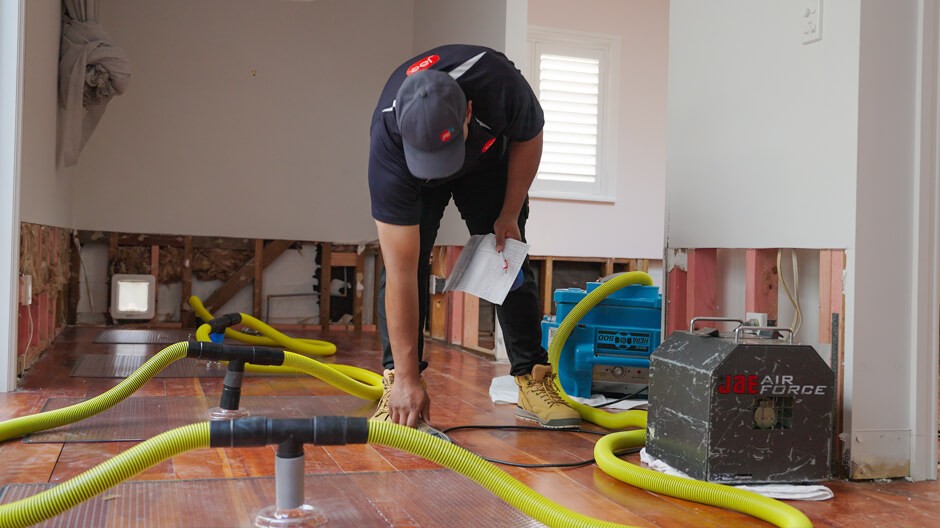
8. Contacting your insurer, and when to call JAE
Once it's safe to do so, get in touch with your insurance provider to let them know what's happened and start the claims process. During major weather events it can be hard to get hold of your insurance, if you can't get through to them, you can contact JAE directly - we're an insurance-approved supplier and work with all major insurance companies, so however you're covered, we can help get started. From there, once it’s safe to do so, our technicians can take moisture readings throughout the property, begin extracting standing water, start structural drying, work on restoring contents if they can be restored, and document everything to support your claim.
During a major weather event, it’s all hands on deck at JAE, we bring extra support in from our nationwide network to help as many people as quickly as we can. We know that the sooner we can start the drying process at your home, the less likely it is that mould can grow and cause any further secondary damage down the track. For more on navigating a claim after a flood, see our guide to a successful insurance claim.
10. Beginning the long-term recovery process
Once the immediate danger has passed and the initial clean-up is underway, recovery moves into a longer process: structural drying and moisture monitoring, mould prevention and treatment, repairing flood-damaged materials, and replacing anything that genuinely can't be saved. How long this stage takes varies a lot depending on how much of the home was affected and how the assessment and insurance process unfolds, but every step is aimed at getting you back into a genuinely safe, dry home, not just papering over the damage.
You'll be surprised what can be saved
A flood doesn't automatically mean your home is irreparable or that everything is ruined and must be thrown out. JAE’s team of qualified Flood Restoration technicians will do their best to restore as much as possible and what can’t be restored your insurance company will organise to have repaired or replaced (depending on your insurance coverage).
Plasterboard usually needs replacing once it's been thoroughly soaked, since it doesn't hold up well in water, but only the affected area needs to be replaced, not the entire wall.
Timber floors can often be dried out and restored rather than ripped up and replaced, provided the drying happens carefully and isn't rushed.
Carpet without rubber backing or underlay can sometimes be professionally cleaned and dried too, though anything affected by black water will usually need to be replaced. Your Insurance company will make the call on this.
Whether a home and its contents can be saved really comes down to how long the water was sitting, how contaminated it was, and what it actually touched, not a blanket rule. That's exactly why a proper assessment matters before writing anything off.
If your home has been affected by a natural disaster flood, JAE are the team to help with your flood restoration.
FAQs
Q. Is my house ruined after a flood?
A. Not necessarily. A lot depends on how long water was sitting, how contaminated it was, and what materials were affected. Many homes can be fully restored with the right drying and repair process, even after serious flooding.
Q. Is it safe to stay in my house after flooding?
A. It depends on what the assessment placard says and how extensive the damage is. A red or yellow placard means you shouldn't be staying there, and even with a white placard, it's worth confirming the home is genuinely safe before moving back in.
Q. Can wooden floors be restored after flood damage?
A. Frequently, yes they can. Timber floors can often be dried out and restored rather than replaced, though this needs to happen carefully and shouldn't be rushed - drying too quickly can cause warping or cracking.
Our website uses cookies. By continuing, we assume your permission to deploy cookies as detailed in our Privacy Policy.