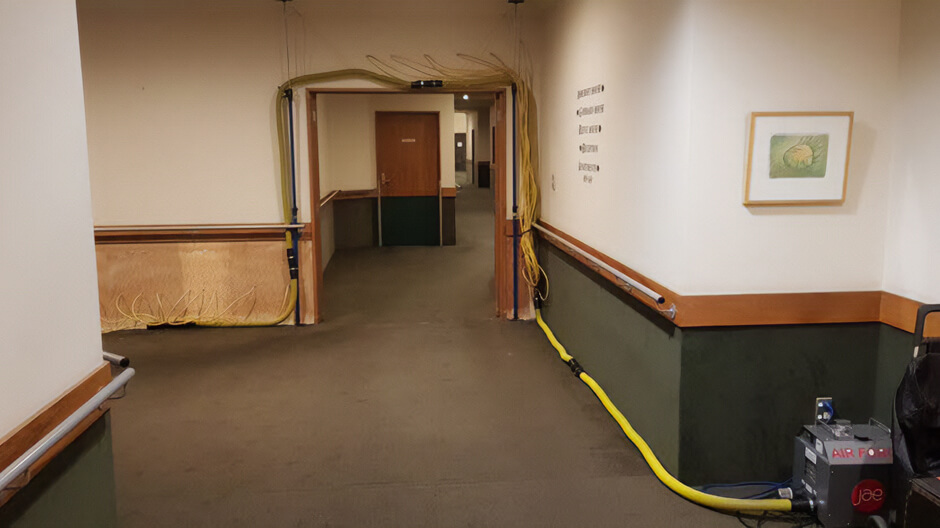
Drying a flooded house involves more than removing visible water, it requires moisture detection, specialist equipment, trained water restoration technicians, and a carefully managed process. Professionals like JAE map moisture inside walls and flooring, remove excess water and contaminants, then use industrial drying systems to restore the carpet and structure safely, preventing mould and long-term damage.
Floodwater doesn’t just sit on the surface, it wicks into carpet underlay, subflooring, wall cavities, and joins. If not professionally dried, it can lead to:
When flooding strikes, time is critical, the longer moisture remains, the higher the risk of long-term damage and mould growth. That’s why it’s important to call JAE first. We’re an insurance-approved provider and can work with any insurer to get the process moving quickly. Our teams respond fast, assess the damage, and begin professional drying right away, helping protect your home, reduce repair costs, and avoid delays in your insurance claim.
Professional flood restoration ensures the drying is complete, safe, and documented.
The first step is understanding the full extent of the water damage, not just what you can see.
Trained technicians will:
Why it matters:
Moisture often spreads into places you can’t see or feel - like under skirting boards or inside walls, behind cabinetry. There is actually a science behind it all! Out technicians understand the science of Psychrometry that deals with the study of the physical and thermodynamic properties of moist air and water vapor mixtures. Understanding this science is critical in the post-flood water damage restoration and drying process.
Fast water removal reduces the overall drying time and limits damage.
This may include:
At this stage JAE technicians will:
Not every carpet needs to be removed, but in some cases it must be lifted to allow for drying of the materials beneath the carpet.
We may:
JAE’s expertise helps determine:
Carpet that can be fully restored vs carpet that needs replacing.
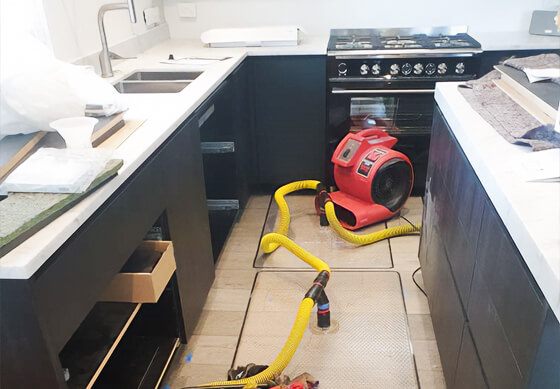
This is where specialist equipment is critical.
Technicians set up a controlled drying system using:
This stage prevents:
Flood restoration is not “set and forget.”
JAE technicians return regularly to check progress and ensure that everything is still running smoothly and progressing as it should.
We track:
Adjustments are often made, such as:
Once fully dry, the affected areas are treated to restore them safely.
This may include:
This is critical for both peace of mind and insurance.
JAE provides:
If replacement is needed, we liaise with insurance providers.
Moisture Detection:
Water Extraction:
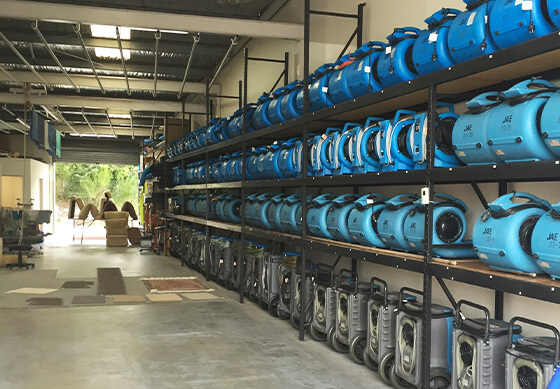
Drying Technology:
FAQ Section
Q: Can I dry a flooded carpet myself?
A: Not completely. While you can start with towels and ventilation, only professional equipment can remove moisture from the underlay, subfloor and walls. DIY drying often leaves hidden moisture that has often penetrated deep into the building material, which can cause mould and structural damage.
Q: Is it safe to keep living in a flooded home?
A: It depends, clean water may be manageable with prompt drying, but contaminated water (such as from storms, sewage or ground flooding) can pose health risks. JAE can assess and advise on safety.
Q: Will insurance cover flood restoration?
A: In most cases, yes, especially if you act quickly and use a professional restoration service like JAE. It will of course depend on what your insurance policy specifically covers. We work directly with any insurance company and provide all documentation required.
Our website uses cookies. By continuing, we assume your permission to deploy cookies as detailed in our Privacy Policy.